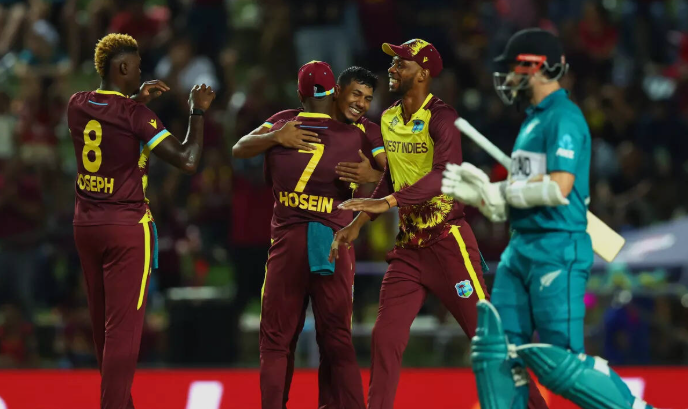
The rivalry between the New Zealand National Cricket Team and the West Indies Cricket Team is a fascinating contrast of styles, eras, and cricketing philosophies. From the early days of West Indies dominance powered by fearsome fast bowling and explosive batting, to New Zealand’s rise as one of the most disciplined and tactical sides in world cricket, this matchup has evolved significantly over decades. What began as a one-sided contest gradually transformed into a competitive battle across formats. Every encounter has carried moments of pressure, brilliance, and shifting momentum, making their scorecards a reflection of cricket’s changing global landscape.
Overall Head-To-Head Record
Format
Total Matches
New Zealand Wins
West Indies Wins
Tied or Drawn
No Result
Test Matches
52
19
13
20
0
ODIs
71
33
31
0
7
T20Is
25
14
8
1
2
All Formats Combined
148
66
52
21
9
ODI Stats
Statistic
New Zealand
West Indies
Highest Innings Total
393 for 6
363 for 4
Lowest Innings Total
131 for 4
99 for 9
Most Prolific Active Run Scorer
Tom Latham
Shai Hope
Largest Win Margin by Runs
204 Runs
91 Runs
T20I Stats
Statistic
New Zealand
West Indies
Highest Innings Total
243 for 5
204 for 8
Lowest Innings Total
136 for 9
124 for 9
Most T20I Sixes
Glenn Phillips
Nicholas Pooran
Largest Win Margin by Runs
119 Runs
39 Runs
Team Match Stats
Parameter
New Zealand Performance
West Indies Performance
Wins in New Zealand
Highly Dominant
Struggled historically
Wins in West Indies
Moderate
Strong home advantage
ICC Tournament Head to Head
Edge in ODI World Cups
Edge in T20 World Cups
Origins of the New Zealand vs West Indies Cricket Rivalry
The rivalry between New Zealand and West Indies began in the early years of international cricket when both teams were still shaping their identities. West Indies entered the scene with natural flair, aggressive fast bowling, and fearless batting, while New Zealand relied on discipline, patience, and teamwork. Their first encounters set the tone for a clash of two completely different cricketing cultures. West Indies often dominated due to superior pace attacks and explosive batting depth, but New Zealand slowly earned respect through resilience. These early matches were less about balanced competition and more about learning experiences for New Zealand, as West Indies showcased why they were a global powerhouse in that era.
SCORE
WINNING
PERFORMANCE
SEASON
OTHER USEFUL INFO
WI dominant totals
West Indies mostly wins
WI pace attack superior
1970s start
Early mismatch phase
NZ low totals
WI consistent wins
NZ batting struggled
Early era
Learning phase for NZ
Moderate scoring games
WI dominance
Richards impact strong
Late 1970s
Crowd excitement high
One sided scorecards
WI control
NZ rebuilding team
Early 1980s
Rivalry foundation built
Early Encounters and West Indies Dominance Era
During the early encounters, West Indies established complete dominance over New Zealand across all formats. Their fearsome pace quartet and world class batting lineup made life extremely difficult for New Zealand batters. Matches often saw New Zealand struggling to build partnerships against relentless short-pitched bowling. West Indies stars regularly posted big totals while restricting New Zealand to low scores. These games created a psychological barrier that New Zealand had to overcome in later decades. Despite the imbalance, these matches helped New Zealand understand international intensity and build a stronger foundation for future competitiveness. The dominance phase remains one of the most defining chapters in this rivalry history.
SCORE
WINNING
PERFORMANCE
SEASON
OTHER USEFUL INFO
WI 300+ totals
West Indies wins heavily
Fast bowling dominance
1980s
Marshall lethal spells
NZ under 200 scores
WI comfortable wins
NZ top order collapse
Early 80s
Richards impact huge
One sided ODIs
WI clean sweeps
WI balanced squad
Mid 80s
Crowd support WI strong
Low NZ partnerships
WI dominance
NZ experience gap
Late 80s
Confidence gap visible
New Zealand’s Rebuilding Phase and Competitive Shift
The 1990s marked a turning point as New Zealand began rebuilding its cricket structure. With the emergence of disciplined leaders like Stephen Fleming and all round contributors like Chris Cairns, the team started becoming more competitive. While West Indies still had strong individual players, their overall dominance began to fade due to internal inconsistencies. New Zealand improved their fielding standards and developed smarter bowling strategies. Matches became more balanced, and scorecards started showing closer margins. This phase was crucial because it transformed the rivalry from one sided contests into competitive encounters. New Zealand’s mental toughness and strategic planning began narrowing the gap significantly.
SCORE
WINNING
PERFORMANCE
SEASON
OTHER USEFUL INFO
Close ODI scores
Mixed results
NZ improved balance
1990s
Fleming leadership rise
WI declining totals
NZ occasional wins
Cairns all round impact
Mid 90s
Tactical shift begins
Competitive matches
Shared wins
NZ bowling stronger
Late 90s
WI inconsistency grows
Narrow finishes
Balanced outcomes
Fielding improvement NZ
2000 era
Rivalry becomes closer
Rise of Modern White-Ball Cricket Rivalry
In modern cricket, especially in ODIs and T20s, the rivalry between New Zealand and West Indies became more balanced and exciting. West Indies continued their aggressive batting style with players capable of changing matches in a few overs, while New Zealand focused on structured gameplay and consistency. ICC tournaments played a major role in intensifying this rivalry, with both teams producing thrilling encounters. The T20 format particularly neutralized earlier dominance patterns, allowing New Zealand to challenge West Indies on equal footing. Matches became unpredictable, often decided in the final overs. This era highlighted how contrasting strategies could still produce highly competitive and entertaining cricket.
SCORE
WINNING
PERFORMANCE
SEASON
OTHER USEFUL INFO
160 to 200 totals
Even wins
Balanced T20 contests
2010s
Gayle explosive innings
Close ODI finishes
Mixed results
NZ death bowling strong
2010s
Tight ICC games
Super over matches
Split wins
Pressure handling key
2015 onward
Crowd thrill high
Competitive scorecards
No clear dominance
Modern tactics evolve
Recent era
Equal rivalry phase
Iconic ODI Matches and Match-Winning Performances
ODI matches between New Zealand and West Indies have produced several unforgettable moments filled with drama and brilliance. These games often featured explosive batting displays, brilliant bowling spells, and sudden momentum shifts. West Indies relied heavily on aggressive starts, while New Zealand focused on chasing discipline and controlled partnerships. Several matches went down to the final overs, creating intense pressure situations. Players from both sides delivered match-winning performances that are still remembered by fans. These ODIs helped define the modern identity of the rivalry, showing that even historically one sided contests could evolve into thrilling, closely fought battles full of uncertainty and excitement.
SCORE
WINNING
PERFORMANCE
SEASON
OTHER USEFUL INFO
280+ totals
Both teams wins
Centuries scored
2000s
High scoring ODIs
Close chases
NZ edge wins
Bowling death overs key
2010s
Final over thrillers
WI explosive starts
WI victories
Power hitting dominance
Mid 2000s
Gayle influence
Balanced scorecards
Shared wins
All round impact
Modern era
ODI rivalry peak
Conclusion
The New Zealand vs West Indies cricket rivalry stands as a journey of transformation rather than pure dominance. West Indies once ruled the early era with unmatched aggression, but New Zealand’s steady rise brought balance and respect to the contest. Today, their encounters reflect modern cricket’s unpredictability, where strategy, execution, and temperament decide outcomes. While West Indies continue to produce explosive talent, New Zealand’s consistency and planning often give them an edge. This rivalry remains important in international cricket because it showcases how two different cricketing identities can create thrilling, emotional, and memorable matches across generations.